
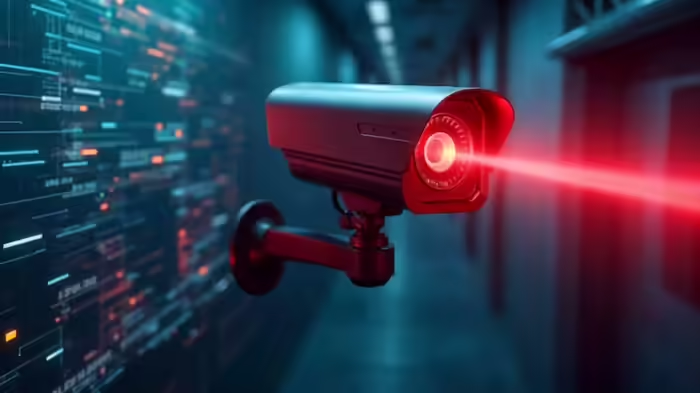
India’s prisons are set to receive a major technological upgrade. Karnataka is introducing an Artificial Intelligence (AI)-based surveillance system to enhance security in jails. This advanced system will be capable of detecting suspicious activities instantly, significantly improving inmate monitoring.
AI System in Indian Prisons
The use of AI is rapidly increasing worldwide, including in India, and it is now being applied to surveillance systems. Karnataka Jail Director General Alok Kumar recently announced plans to implement AI-driven monitoring in state prisons. Testing of the system has already begun. The technology enables cameras to identify abnormal behavior on their own and alert authorities in real-time, acting like a tireless security guard. This will help prevent illegal activities inside jails more effectively.
How AI Differs from Normal CCTV
Traditional CCTV cameras only record footage, requiring personnel to spend hours monitoring screens. Keeping track of all inmate movements manually is challenging, as human attention can waver, leading to missed incidents. In contrast, the AI system continuously analyzes video feeds, identifies unusual behavior—such as a prisoner moving into restricted areas or carrying suspicious items—and triggers alarms automatically. Jail staff no longer need to monitor everything in real time, improving efficiency and response time.
Global Use of AI in Prisons
AI surveillance is not new. Many U.S. states use AI in prisons to track inmate activity and detect weapons. The U.K. has implemented similar systems, while Singaporean AI cameras can even predict potential riots by monitoring crowd behavior. China extensively uses facial recognition and behavior analysis, though it raises privacy concerns. In India, plans are underway to install AI monitoring in prisons such as Tihar.
Benefits for Indian Prisons
The AI system will bring multiple benefits: escape attempts can be detected immediately, fights among inmates can be prevented, and prohibited items like mobile phones, weapons, or drugs can be identified upon entry. It will also help prevent organized unrest and provide additional security in facilities facing staff shortages.
Challenges Ahead
Deploying AI in Indian prisons is not without challenges. The system requires extensive data to be trained effectively. Cultural and religious activities must be recognized correctly to avoid false alarms. High installation and maintenance costs, potential system errors, and misuse of AI technology are also concerns that authorities will need to address.
With AI-powered monitoring, Indian prisons aim to significantly enhance security while reducing reliance on manual surveillance, marking a major step toward modernizing correctional facilities.
Related
Discover more from SD NEWS agency
Subscribe to get the latest posts sent to your email.
Discover more from Global Chronicle
Subscribe to get the latest posts sent to your email.